



Key Takeaways
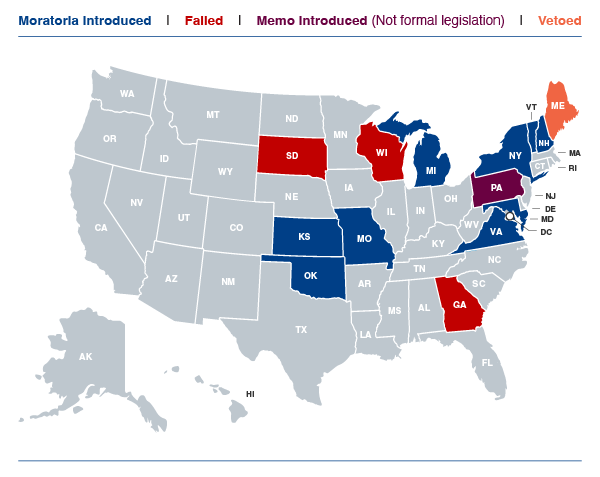
- 14 states have introduced data center moratoria in 2026
- Most proposals focus on temporary pauses to study grid, water, and cost impacts
- Some states are moving toward permanent siting restrictions
- Ballot initiatives signal growing local and bipartisan resistance
The Shift Away from Incentives
The turn of the decade saw state and local governments offering robust incentives for data center development. The current landscape is markedly different. This new landscape was evident at the outset of the year, when Governors’ across the nation emphasized affordability, cost protection, and solving energy demand issues in their State of the States addresses.
Amid growing public concern about the cost of electricity, lawmakers across the country are re-evaluating how large-load facilities are integrated into local economies. These approaches range from agreements with hyperscalers to ensure equitable cost allocation, “bring your own power” models, and partnerships between developers and communities to provide community benefits.
However, some lawmakers are going further. Instead of refining tariff and agreement structures, they are proposing outright bans, pauses, or stringent siting requirements on new data center construction.
Temporary Moratoria: A “Pause to Study”
Most legislative efforts to date have focused on temporary pauses designed to allow for comprehensive impact assessments.
In Maine, LD 307 establishes a temporary pause until 2027 for facilities exceeding 20 MW while a council evaluates long-term impacts on grid reliability and ratepayers. Governor Mills vetoed the legislation, noting that while she broadly supported the intent, the bill did not include an exemption for a planned data center in Jay. That project, set to replace a mill that closed in 2023, is expected to provide a significant economic boost to the region. Despite the veto, the governor indicated she will move forward with establishing a similar council.
Several other states are pursuing comparable approaches:
- Oklahoma (SB 1488): Moratorium until 2029 to study impacts on water supply and property values
- New York (S9144): Temporary halt on permits for facilities over 20 MW pending environmental review
- Michigan (HB 5594): Prohibits approval and operation of data centers until April 2027
- Kansas (SB 531): Targets water-constrained counties rather than implementing a statewide pause
From Pauses to Permanent Restrictions
Some states are moving beyond temporary measures and proposing stricter, long-term land-use controls.
In Missouri, HB 3390 would prohibit hyperscale data centers in areas designated for agricultural, residential, or conservation use. The measure, which was introduced in February, also mandates 500-foot setbacks and restricts construction within ten miles of certain recreational lands and five miles of state waters.
Virginia took a similarly aggressive approach. HB 1515 would have prohibited localities from approving rezoning or site plans for new data centers until 2028 or until existing interconnection requests were fulfilled.
Although efforts in Virginia, Georgia (HB 1059), South Dakota (SB 232), and Wisconsin (SB 1061) failed to advance, the volume and scope of these proposals underscore how quickly the policy landscape is evolving.
Ballot Initiatives Signal Broader Public Pushback
This shift is not limited to state legislatures. It is increasingly appearing at the ballot box.
Statewide moratorium initiatives have been proposed in California and Ohio, though the Ohio measure is unlikely to secure enough signatures to appear on the November ballot. California’s goes broader and covers “essential projects” that include local approval for broader energy, public health, and transportation projects. These efforts reflect growing public skepticism across regions and political alignments.
At the local level, ballot measures are even more varied, ranging from outright bans to increased voter control over development decisions:
- Monterey Park, CA (Measure NDC): Would amend land use rules to prohibit data centers
- Port Washington, WI: Voters approved a measure requiring approval for Tax Incremental Districts exceeding $10 million
- Janesville, WI: Will vote on requiring approval for developments exceeding $450 million
- Eldorado Valley, NV (Question 1): Would require voter approval for data center development in designated areas
Together, these measures signal a growing desire for direct community input in large-scale infrastructure decisions.
What This Means Going Forward
Legislative and municipal actions point to a clear transition toward a more rigorous regulatory environment for data center development.
The era of broadly incentivized expansion is giving way to one centered on long-term resource management, grid reliability, and community benefits. Whether through state-mandated moratoria, environmental review requirements, or direct voter participation, the future of large-scale data infrastructure is increasingly shaped at the local level.
Juan Gomez is the Senior Manager of Energy Policy at Stateside Associates. Prior to joining Stateside, Juan supported the US Department of Energy on a range of initiatives related to energy security, cybersecurity, emergency response and resilience. He has additional experience from global risk advisory firms and energy policy think tanks. Juan leads Stateside’s research efforts and contributes to strategic advisory for energy policy clients.
Stateside’s Energy practice, led by Taylor Beis, VP of Energy Policy, provides strategic guidance to clients across the ever-changing energy landscape. From optimizing clients’ participation in national membership organizations, to developing tailored strategic planning, policy guidance, and messaging, our dedicated energy policy consultants steer clients through the complex energy ecosystem.
Additionally, our energy practice performs legislative and regulatory monitoring that cuts through the uniquely challenging process environment of state legislatures, public utilitiy and service commissions, and rulemaking to inform companies of the opportunity to engage in the policy and regulatory process, or to confidently remain in compliance.