
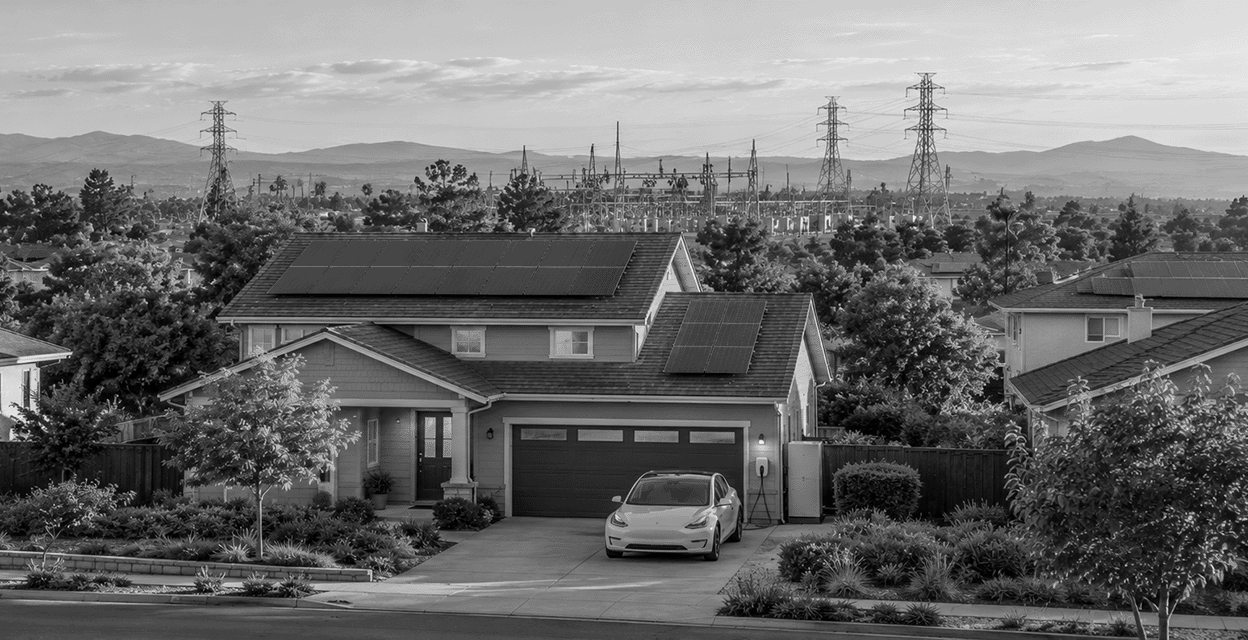


The United States is facing a grid reliability problem. Traditional electric grids were designed for one-way power flow from centralized baseload power plants (typically fueled by coal, natural gas, and nuclear) to consumers. Today, our nation's electric grid faces increasing stress from extreme weather events and surging electricity use. Our current grid infrastructure is struggling to keep up with modern energy demands.
To prevent blackouts during periods of peak demand, grid operators rely on “peaker plants,” when electricity demand spikes. These facilities can increase localized emissions and can contribute to higher energy costs since they are maintained year-round but only run for a few hours a year.
To address these challenges, states are looking toward a new solution: virtual power plants (VPPs).
A virtual power plant is a network of distributed energy resources (DERs), such as rooftop solar panels and EV chargers, that can operate together like a single power plant to balance electricity supply and demand. These flexible resources can be coordinated by utilities and grid operators during periods of grid stress. VPPs are integrated at the grid's distribution level and use digital communications, including Wi-Fi, cellular networks, and other technologies, to coordinate distributed energy resources. VPPs can lower consumer costs by integrating more DERs, and potentially lower carbon emissions, depending on DER resource.
States Are Moving to Establish VPP Programs
Recognizing the need to modernize the grid, many states are taking legislative and regulatory action to establish VPP programs. Earlier this year, Illinois enacted SB 25, which requires the Illinois Commerce Commission (ICC) to establish a scheduled VPP dispatch power plant program that is open to all customer classes with eligible energy storage units. Under the program, participating customers can receive compensation for the energy and grid services provided during peak demand events.
Another success story for VPPs this year can be seen in Virginia. In March, Governor Spanberger (D) enacted companion bills HB 562 and SB 487. These measures authorize electric cooperatives to establish a VPP and “offer incentives to residential customers to purchase battery storage devices.” The cooperatives must also analyze ways to optimize the program demand further.
In New Jersey, Governor Mikie Sherrill (D) issued Executive Order 2, directing the Board of Public Utilities (BPU) to develop a VPP program to “drive down peak demand by aggregating behind-the-meter distributed energy resources.” The order requires the BPU to identify ways to promote the development of distributed energy resources and allow them to participate in the PJM capacity market.
Regulators Are Advancing VPP Pilots
Other state public utility commissions are establishing regulatory frameworks needed to pilot and scale VPPs. The Maryland Public Service Commission issued an order directing electric utilities to accelerate VPP deployment, with the aim of reducing consumer energy costs and advancing the state's climate goals. The order implements Maryland's 2024 DRIVE Act, which establishes rules needed for electric vehicles and home batteries to send stored power back to the grid during high demand periods. Building on those rules, the PSC approved new pilot programs for BGE, Pepco, Delmarva Power, and Potomac Edison to test how VPPs and bidirectional vehicle charging may help power the grid. The pilots are set to launch by the summer of 2027 and could cut peak power demand by 185.7 MW. Utilities will pay customers or device aggregators when their batteries, EV chargers, or other commercial equipment feed power back or cut usage during grid stress. In Minnesota, the Commission approved Xcel Energy’s utility-owned, battery-based VPP, which will deploy up to 200 MW of batteries across its local grid by 2028 through its Capacity*Connect program.
Questions Remain as VPPs Scale
While VPPs are gaining momentum, questions remain about how these programs should be structured and implemented. Critics have raised concerns about program costs, cybersecurity, customer data privacy, resource availability, and whether utility-owned models provide sufficient opportunities for customer-owned and third-party resources. These concerns have surfaced in Minnesota, where stakeholders challenged aspects of Xcel Energy’s Capacity*Connect proposal and called for greater consideration of alternative ownership models. As more states explore VPPs, policymakers and regulators will likely continue weighing these issues as they determine how programs should be designed, funded, and operated.
More and more states are considering establishing their own VPP programs and furthering distributed energy deployment, including Massachusetts, Oregon, Michigan, and others. As state legislatures prepare for the 2027 legislative session, virtual power plants are likely to remain a key focus for energy policy. The growing legislative and regulatory momentum suggests that decentralized, networked energy resources will continue to play an increasingly important role toward a more resilient and reliable grid. As extreme weather and rising demand continue to test infrastructure, VPPs can offer states a cost-effective path for a more adaptable grid.
Navigate Energy Policy with Confidence
As states adopt new approaches to grid reliability, affordability, and emerging technologies, organizations need a clear view of what is changing and what it means for their priorities. Stateside provides nationwide policy intelligence and strategic guidance to help you anticipate developments, assess risk, and engage effectively across all 50 states.
Contact us to learn how Stateside can help your organization navigate the evolving energy policy landscape.
Addison Green is a Legislative Issue Manager working with the energy team in the Legislative Division. Prior to joining Stateside, she was a legislative intern at a law firm based in Washington, D.C. Addison holds a bachelor’s degree from The George Washington University in Political Science with an emphasis in public policy and Criminal Justice. Addison is from San Diego, California and enjoys watching movies, going to the beach, and spending time with her family and friends.
Juan Gomez is the Senior Manager of Energy Policy at Stateside Associates. Prior to joining Stateside, Juan supported the US Department of Energy on a range of initiatives related to energy security, cybersecurity, emergency response and resilience. He has additional experience from global risk advisory firms and energy policy think tanks. Juan leads Stateside’s research efforts and contributes to strategic advisory for energy policy clients.