
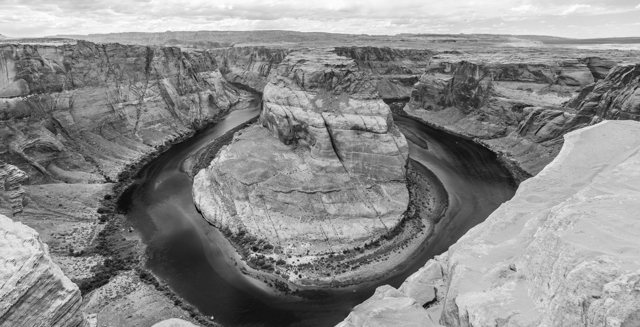


This summer, seven states in the American Southwest have surrendered to federal mediation in the battle to access scarce water resources in the Colorado River Basin. After years of failed negotiations, the states have turned to the U.S. Bureau of Reclamation to draft new allocations for water drawn from the Colorado River to serve 10 percent of Americans and 15 percent of U.S. farmland.
With the previous water-sharing agreement set to expire at the end of 2026, concerns over an unprecedented drought in the American West have come to a head, with the previous water-sharing agreement set to expire. Meanwhile, water levels in America’s two largest reservoirs, Lake Mead in Arizona and Nevada and Lake Powell in Arizona and Utah, are rapidly dropping and will soon approach their “minimum power pools,” or the levels at which they will no longer be able to generate hydroelectricity.
Who has the Right to Water?
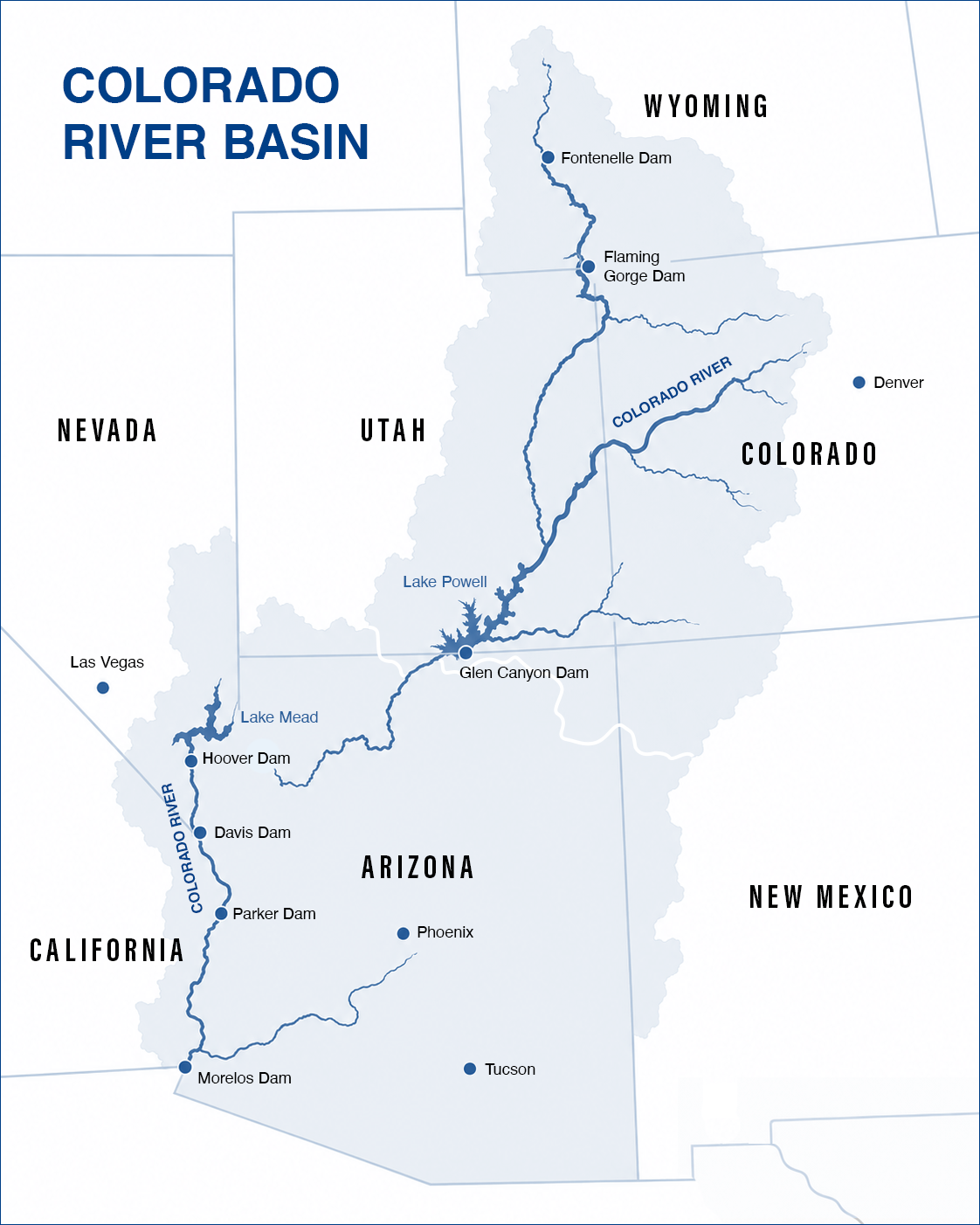
In 1922, seven states signed the Colorado River Compact to allocate water from the Colorado. The compact allocates between Upper Basin states (Wyoming, Colorado, Utah, and New Mexico) and Lower Basin states (Arizona, California, and Nevada). Subsequent treaties, laws, and court decisions govern water-sharing with Mexico and 30 Tribal nations that were excluded from the 1922 negotiations. Within each state, access is determined via “Prior Appropriation” – the first people to divert water for human use have priority when a shortage occurs.
The Thousand-Year Drought
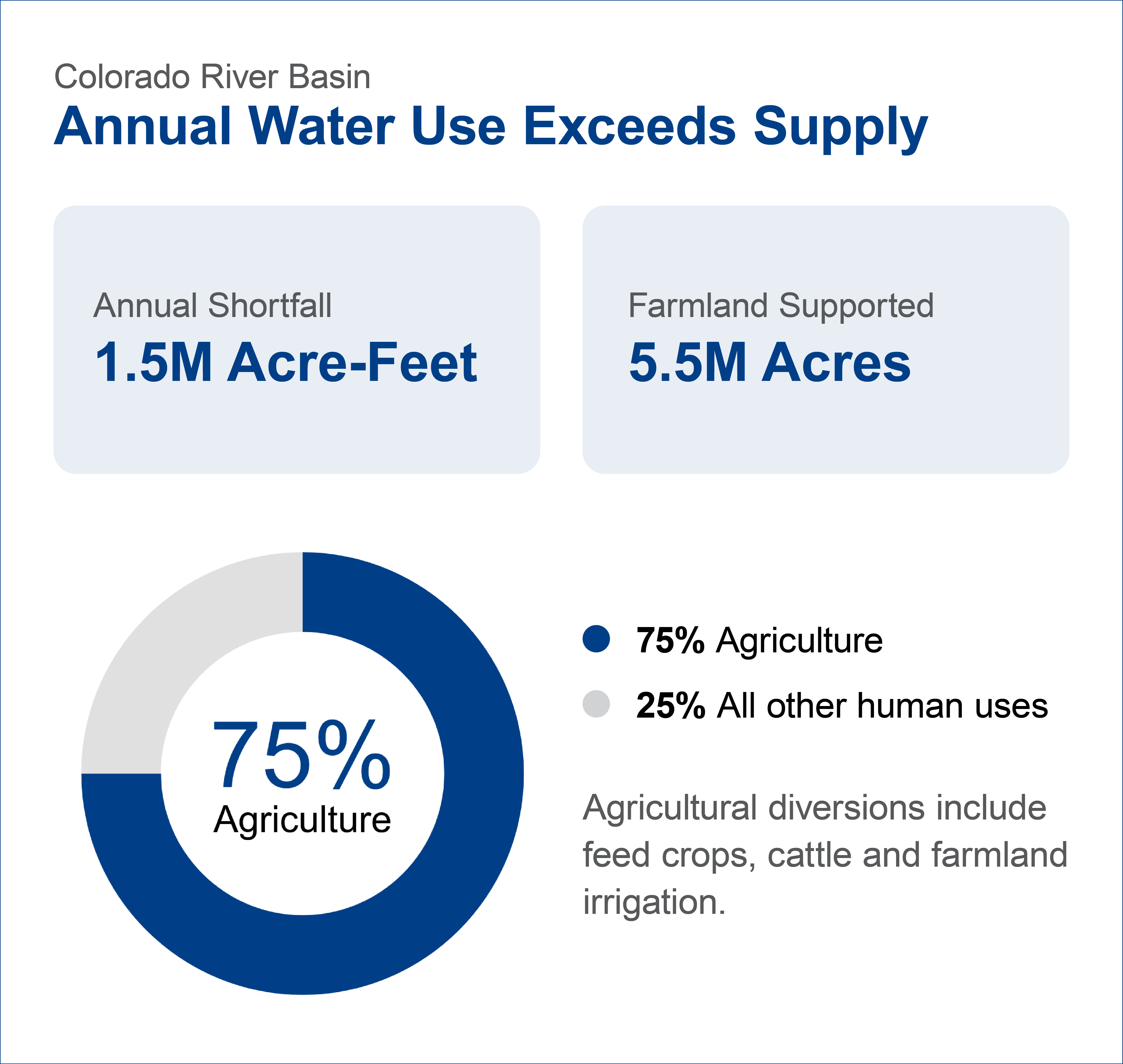
Each year, consumers in the Colorado River Basin use 1.5 million acre-feet more water than naturally flows through the system. Nearly 75 percent of human use along the river is diverted to agriculture – for feed crops, cattle, and 5.5 million acres of farmland.
To bridge this shortfall, Lower Basin states draw on the reservoirs at Lake Powell and Lake Mead, which have fallen to 25 percent capacity and could be “mostly depleted” in a dry year, according to Bureau of Reclamation projections. Water levels in Lake Powell, which is held back by the Glen Canyon Dam in Arizona, could fall below the level of its hydroelectric turbines as early as February 2027. The hydroelectric system is also responsible for diverting water to Utah, which would instead need to rely on bypass tubes not recommended for long-term use. At the Hoover Dam, which supplies power to 1.3 million Americans, 70 percent of hydroelectric turbines could be threatened by falling water levels as soon as April 2028.
This chronic overuse by Lower Basin states is compounded by climate change, which is lowering annual snowpack and causing early spring snowmelt that evaporates before entering the river. From early last century to now, Colorado River flows have fallen by as much as 30 percent, according to Colorado River Science.
The Upper Basin vs. the Lower Basin
As early as 2022, the seven states in the Colorado River Basin started talks on an ambitious treaty to quantify water allocations for the next 20 years. However, after repeatedly missing deadlines and even after scaling back the agreement, the states have failed to find common ground.
States in the Lower Basin rely on releases from Lake Powell and Lake Mead to support their current consumption and want guaranteed releases in any new agreement. Upper Basin states argue that they already cut down on consumption based on natural flows of the river – and they don’t have massive reservoirs like Powell and Mead to draw on.
Although the states have historically fought to keep the federal government out of water governance, the negotiations grew so embittered that the U.S. Bureau of Reclamation set strict deadlines, first in November 2025 and later in February 2026, but still the states failed to agree.
On the eve of the February deadline, Upper Basin states reiterated their position rejecting mandatory system-wide cuts. They argued that they already consume less than their allocation under the 1922 Compact to allow enough water to flow to the Lower Basin. In May, the Lower Basin submitted a bridge proposal to the federal government to reduce its own river consumption. Both the Upper and Lower Basin plan to use federal funds to pay rights holders to forgo their annual allotments.
When the Bureau of Reclamation plan is eventually released, this issue may still be far from finished. States are gearing up for a protracted legal battle if the federal agency rules against them. Arizona has established a dedicated $9 million legal fund and retained a law firm in preparation, while Utah, Wyoming, and Colorado all set aside funding in their state budgets in case of legal challenges over the river.
The Federal Proposal
This summer, the federal government is set to release its own 10-year framework to share water between the Upper and Lower Basins. Every two years, the deal will be reassessed based on water forecasts.
The deal will include minimum releases into Lake Powell and Lake Mead from upriver states and will likely also leverage federal funds to convince consumers to forgo their allotments.
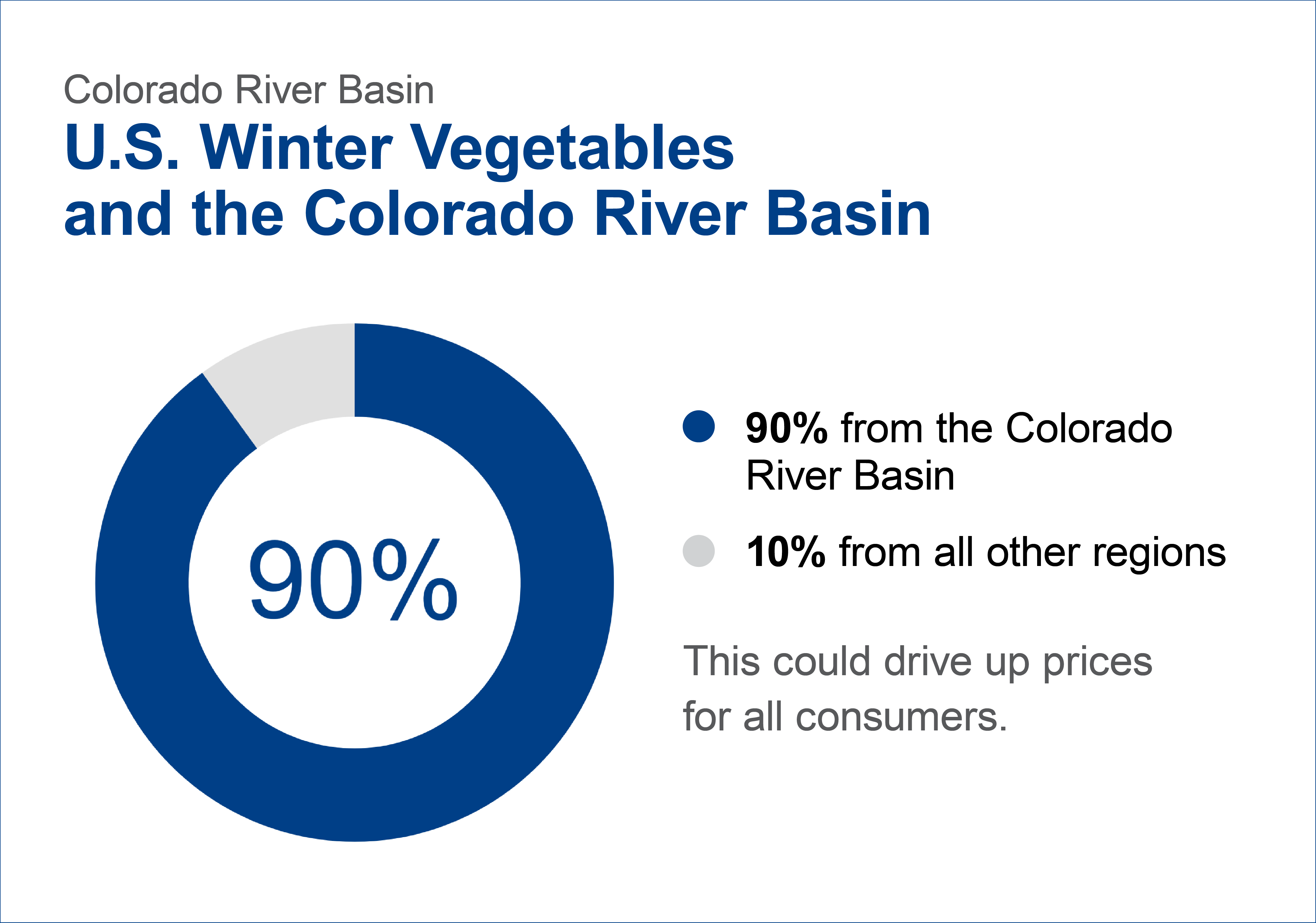
Due to Prior Appropriation obligations, Tribes and cities will be the last to feel water cutbacks, while non-Tribal agriculture allocations will be the first to go. Cuts to agriculture could have massive economic impacts, both locally and nationally. For example, 90 percent of winter vegetables grown in the U.S. come from the Colorado River Basin, which could drive up prices for all consumers.
The federal plan leaves the door open for future negotiations but is a far cry from the detailed, 20-year agreement that states sought to draft three years ago. Due to dwindling snowpacks and rising temperatures, the amount of water flowing through the Colorado is not likely to rebound any time soon. A federal agreement could save the reservoirs in the short term and push off difficult questions for another few years. However, water allocation issues in the Southwest will likely be bitterly debated for many years to come, unless states make fundamental changes to how they distribute and use their water.
Stateside helps clients track and navigate high-stakes interstate negotiations like this one, translating complex regulatory battles into clear business implications. Contact us today to learn how state-federal policy disputes might impact your organization — and how to get ahead of what comes next.