



Public policy used to happen in quiet rooms with comfortable chairs. Today, it happens in inboxes. Welcome back to our advocacy series—in previous posts, we’ve shared why public policy advocacy is important, why the fights are increasingly at the state level, and how to identify your key stakeholders. Next up is developing the toolkit further—using grassroots and grasstops strategies to advocate for you on your most important issues.
Historically, organizations could rely almost exclusively on professional “inside” lobbyists in Washington or state capitols. Today, however, public policy is no longer made solely in private negotiations between political insiders. Because power in legislatures has become decentralized and public interest groups have proven the effectiveness of citizen campaigns, institutional grassroots lobbying campaigns have become prevalent. Whether you are a massive tech platform or a localized trade association, you need to convince politicians that the broader community is deeply concerned about your issues. Remember, the key to public policy advocacy success is demonstrating aligned interests—things like agreement on a policy issue or voter support for a reelection campaign.
Grassroots vs. Grasstops
Before we dive into some of the mechanics, it is important to distinguish between the two primary pillars of outside lobbying. Grasstops and grassroots are both an important part of any successful advocacy campaign, and they sound similar, but they serve different functions.
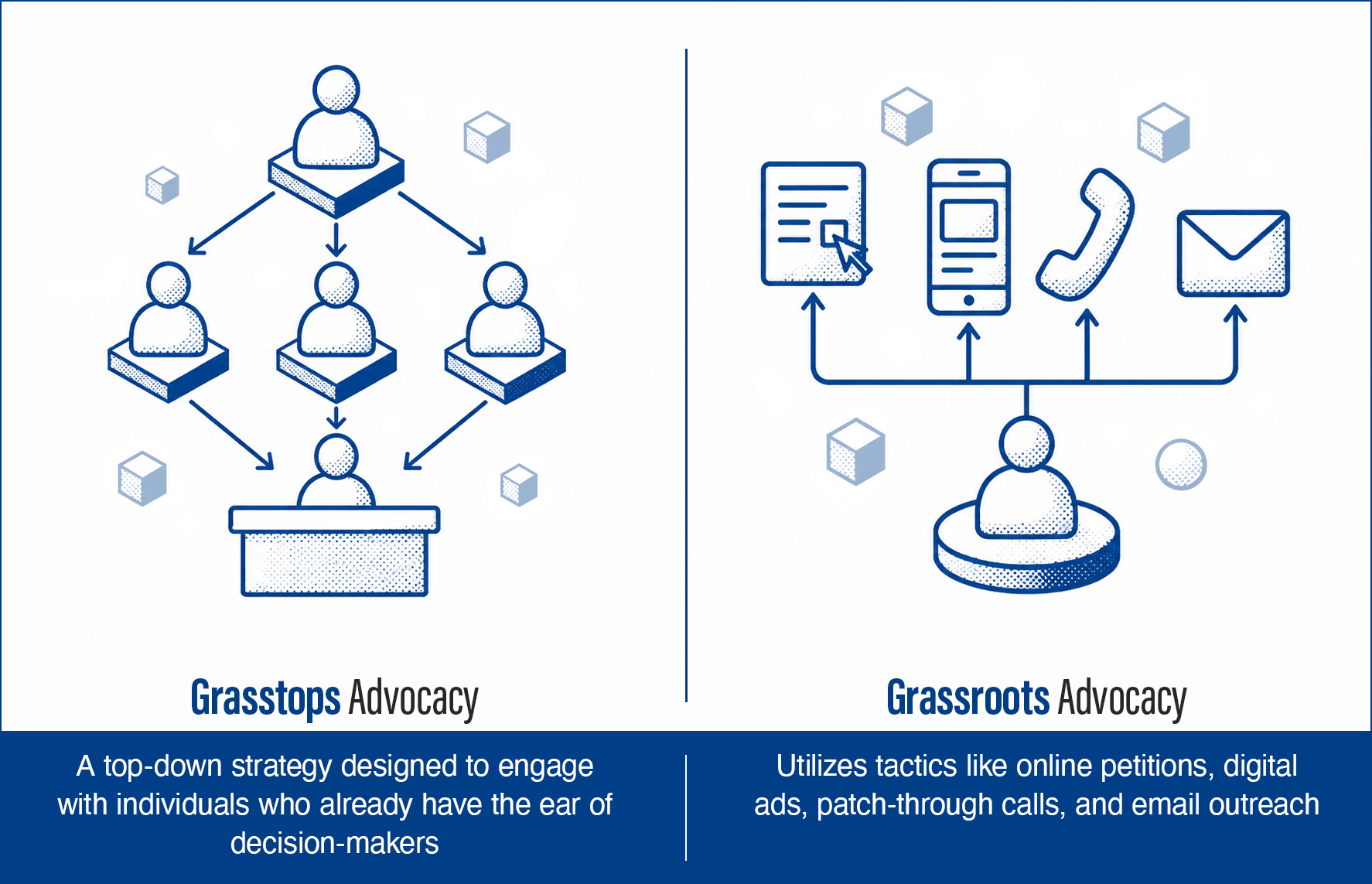
Grasstops advocacy is when you focus your outreach efforts narrowly on opinion leaders and folks who have strong connections to elected officials. It is a top-down strategy designed to engage with individuals who already have the ear of decision-makers. When executing a grasstops strategy, you might reach out to an officeholder’s donors, friends, church members, or leaders within their political party. Grasstops may include a media strategy or one-on-one meetings with these opinion influencers.
Grassroots advocacy, on the other hand, is when you reach out to everyday constituents in select legislative districts and have them connect with their legislator on an issue you both care about. This is a bottom-up strategy that taps into the collective voice of a community. Grassroots campaigns utilize tactics like online petitions, digital ads, patch-through calls, and email outreach. Imagine you are an elected official and how incredibly hard it may be to ignore an unprecedented onslaught of authentic communications from your own constituents.
The Customer as Constituent
When a business or industry faces legislation that impedes the sale of their product, their capacity to provide a service, or their overall autonomy, political activity becomes highly necessary. To win these legislative battles, corporations have turned their natural constituencies—employees, shareholders, suppliers, and loyal consumers—into a standing political asset.
During the national fight over net neutrality, one major e-commerce company took a unique approach. The CEO sent a personal email blast to over a million customers, warning them that telecom and cable companies were trying to use their political muscle to drastically change how they can use the internet. The call-to-action urged customers to contact their representatives in Congress before it was too late. This massive outreach effectively leveraged the “customer as constituent” to apply direct pressure on federal lawmakers – with great success.
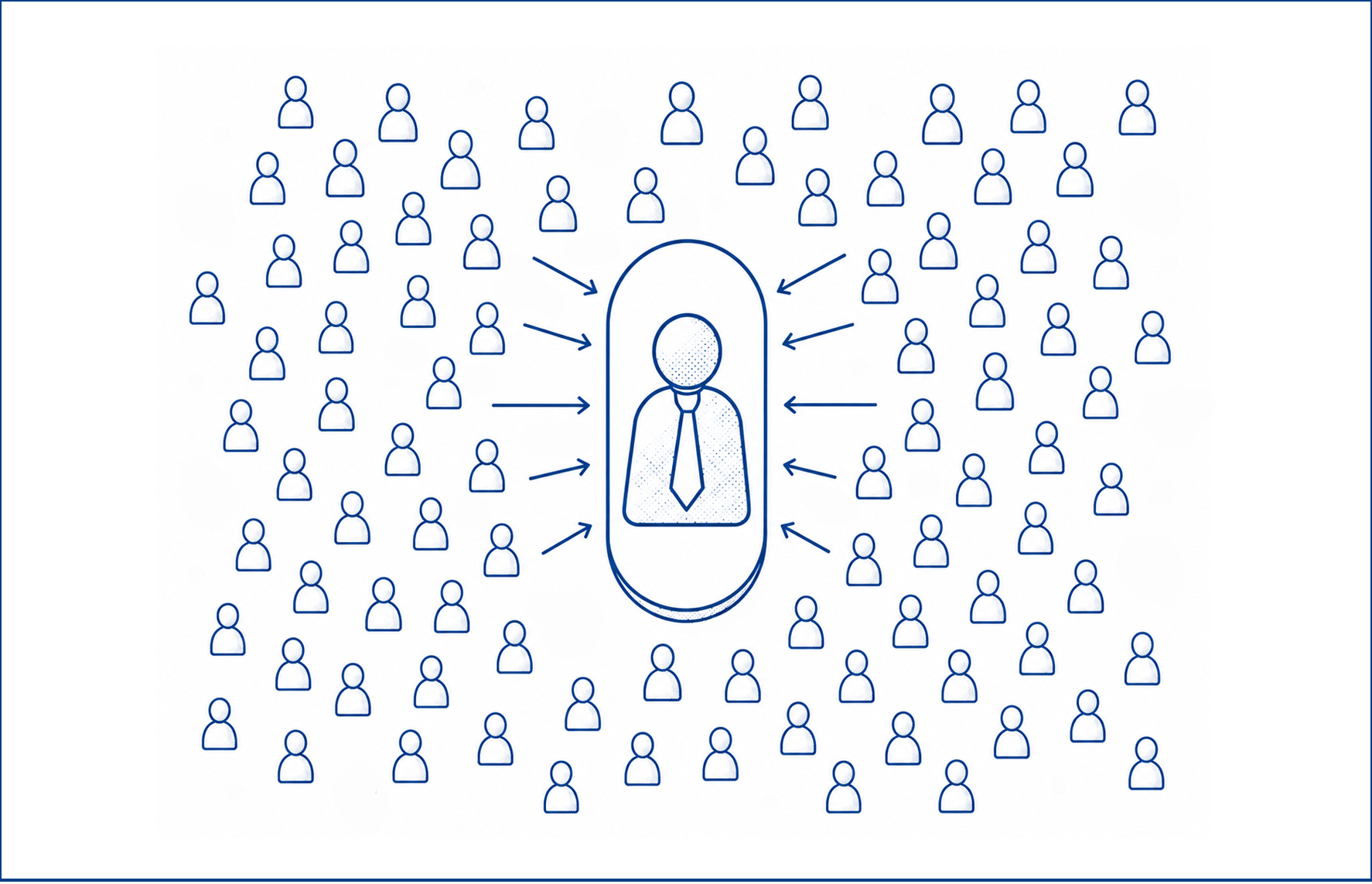
"To win these legislative battles, corporations have turned their natural constituencies—employees, shareholders, suppliers, and loyal consumers—into a standing political asset."
Peer-to-peer networks, ride-hailing, and online gaming industries have all successfully run the customer-as-constituent playbook. One ride-hailing company famously added a feature to its app during a regulatory fight in New York City, where the Mayor had proposed a vehicle cap. The feature allowed riders to contact their lawmaker directly from the app, making it easy for customers to weigh in against the proposal. Turns out, nothing motivates a New Yorker to email their city council member quite like the threat of waiting 25 minutes for a ride.
Using Technology for Better Reach
The methods used to connect these natural constituencies to lawmakers are evolving rapidly. Email, patch-through phone calls, and snail-mail letters are some standard tools. Fly-ins, where the organization brings customers to meet with their elected representatives, are also highly effective.
Many newer technologies make a big difference in modern campaigns. One emerging tool combines the efficacy of an in-person meeting with the convenience of watching a short video, in which the constituent discusses how important the issue is to them and their community. If the official wants more information after viewing the video, it is very easy to follow up.
Modern digital advocacy platforms can capture these stories at the exact moment of engagement, prompting a supporter who just signed a petition to immediately record a short video testimonial.
Quality, Quantity, and the Authenticity Mandate
When you are mobilizing supporters, large numbers are generally effective—turning out hundreds or thousands of contacts can make a real splash. But a high-quality message—making clear, compelling, and personal appeals to the member—in smaller quantities can also be incredibly effective. Don’t mistake volume for effectiveness—it can work, but it can also backfire if the message feels boilerplate, not customized, or generated by an AI bot.
Today, authenticity has become completely non-negotiable. Like the way a jeweler can tell the difference between a diamond and a rhinestone, a legislative correspondent in a congressional office can tell immediately whether an incoming message is a copy-paste submission or a real story. The digital advocacy technology that made it cheap to send a million identical emails has simultaneously devalued that output. Research from the Congressional Management Foundation reveals that when staffers are weighing a piece of legislation, 91 percent say information about how the bill would affect their specific district or state is the most helpful factor. Furthermore, 79 percent said a personal story from a constituent tied to the issue is highly influential. However, only 18 percent of offices report frequently receiving these vital constituent stories.
It is also important to use data to support your arguments and link it directly to the elected official’s district, issue interest area, committee responsibilities, or even future political ambition. Familiarity with the number of customers, small businesses, or quantifiable “good things” that have occurred in the member’s district can be very effective in moving the needle.
Effective grassroots advocacy messages must come from real people, include specific local details, and connect seamlessly to a clear legislative or regulatory ask.
Overcoming Internal Corporate Hurdles
Before you can mobilize a massive list of customers or employees, you have to get permission to talk to them. Very often the marketing team “owns” the list of customers and guards it the way a dragon might guard his treasure—and neither of them is eager to spend it on something as unprofitable as democracy. But as we discussed in previous posts, showing your executives that government affairs activities directly support revenue-generating activities may make breaking that logjam a bit easier. Regardless, sometimes the marketing team is cautious. Working around this internal friction is possible, especially if you’ve cultivated your internal stakeholders as we discussed in the last blog post. Ensuring your executive leadership understands the true value and importance of these kinds of campaigns, and making informed decisions about the trade-offs of how and when to issue a call to action to customers, is vital.
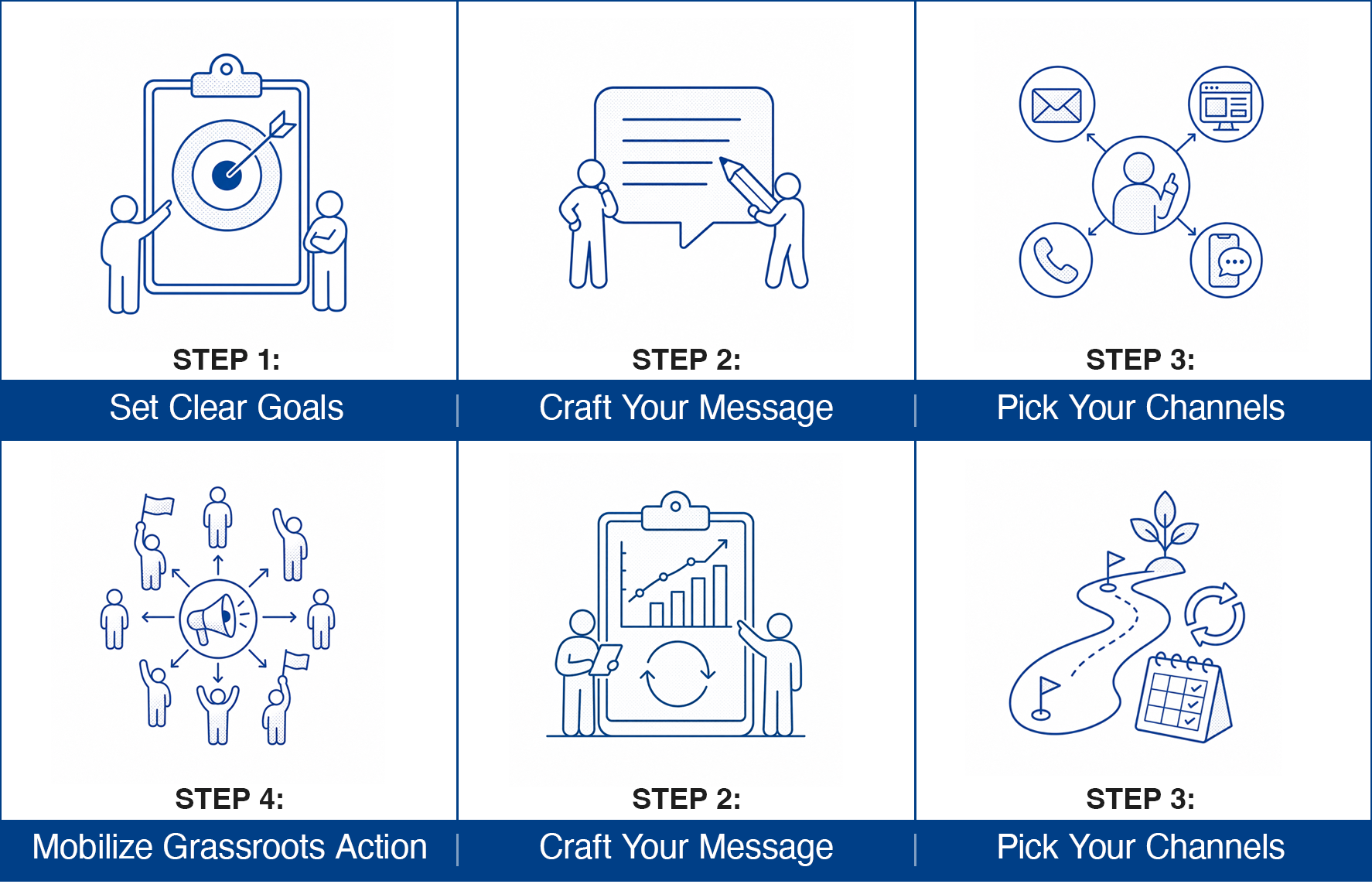
You’ve identified a project and have secured support for moving ahead—now you need a plan. Grassroots campaigns thrive on strategic planning and organized community action. Here is a reliable 6-step blueprint you can follow to ensure your campaign delivers real legislative results:
Step 1: Set Clear Goals
A successful grassroots campaign must start with a well-defined objective. Define your advocacy objectives using SMART criteria (Specific, Measurable, Achievable, Relevant, and Time-bound). Instead of using broad statements like “improve local commerce policies,” you should set a specific goal, such as mobilizing 5,000 advocates to contact their legislators before a key committee vote or securing 10,000 petition signatures within three months.
Step 2: Craft Your Message
Develop a compelling, concise, and emotionally resonant message that clearly defines the core issue, its impact, and the exact action needed to drive change. Your message should answer three questions: What is the issue? Why does it matter? And what actionable step should the supporter take? Support your messaging with hard data, expert insights, and, most importantly, authentic personal stories from your constituents.
Step 3: Pick Your Channels
Successful campaigns implement a strategic mix of traditional advocacy tactics alongside modern digital tools. Utilize a multi-channel approach that includes social media advocacy (both organic and paid), targeted email campaigns, peer-to-peer text banking, and physical community events, fly-ins, and rallies. A balanced combination of digital and traditional outreach maximizes your public engagement.
Step 4: Mobilize Grassroots Action
Encourage direct participation by giving your supporters specific, easy-to-execute tasks. You can equip them with tools to contact legislators by providing pre-drafted, yet fully editable, emails and phone call scripts. You can also utilize online platforms to quickly gather petition signatures or encourage your base to attend public town halls and local training sessions. The key is radical friction reduction—making it incredibly easy for busy people to participate with just one or two clicks. If your call to action requires a printer, you’ve already lost.
Step 5: Track and Improve
Continuously monitor your campaign’s progress using key performance indicators. Regularly track engagement metrics like petition signatures, social media shares, event attendance, public opinion polling, and media coverage. You must also monitor the actual legislative progress on key bills. By constantly assessing this performance data, you can make informed adjustments to your strategies to optimize results and maximize your policy impact.
Step 6: Plan for Long-Term Sustainability
The most dominant companies do not treat their stakeholders as an emergency tool; they treat them as a standing civic asset. Establish a sustainable advocacy framework by training new leaders, developing long-term supporter engagement programs, and documenting your best practices for future campaigns. A vital part of this is closing the feedback loop: supporters who take action need to know what happened, how their lawmaker voted, and what the campaign accomplished. When a stakeholder hears back from you, they are far more likely to show up for your next fight.
Turning Advocacy Into Lasting Influence
A well-executed grassroots advocacy campaign allows you to shape public discourse, influence critical policy decisions, and mobilize communities toward meaningful action. By blending traditional grasstops influence with massive, data-driven, and highly authentic grassroots storytelling, modern government affairs programs can break through the legislative noise. With a clear strategy, a compelling narrative, and an engaged network of stakeholders, your advocacy campaign can effectively amplify voices and leave a lasting impact on the issues that matter most to your organization.
Discover our Strategic Advisory Services and let us provide the intelligence, mapping, and messaging tools you need to shape your environment.
Michelle Peacock, Stateside’s Senior Vice President, Strategic Advisory Services, is widely recognized for thoughtfully building programs from scratch and shaping existing programs to meet the evolving needs of businesses at all sizes and stages of growth, including emerging industry disruptors. She has a long track record of successfully developing innovative strategic policy and advocacy programs that protect favorable regulatory landscapes and adapt them to allow for breakthrough business scale.
Strategic Advisory Services enhances Stateside’s consulting services by adding decades of experience in corporate government affairs and public policy to support organizations in critical moments of transition,. Startups or legacy businesses may face new political landscapes, disruptive market entrants, unexpected regulatory threats, and innovative opportunities, A partnership with Strategic Advisory Services will provide perspective, support and seasoned expertise to guide them as they develop comprehensive, budget-conscious public policy plans tailored to their unique culture, the industry they are disrupting, and their tolerance for political risk.
Stateside’s unique vision and guidance provides essential intelligence, mapping and messaging so companies can effectively navigate an ever-shifting landscape and flourish in uncertain conditions.