
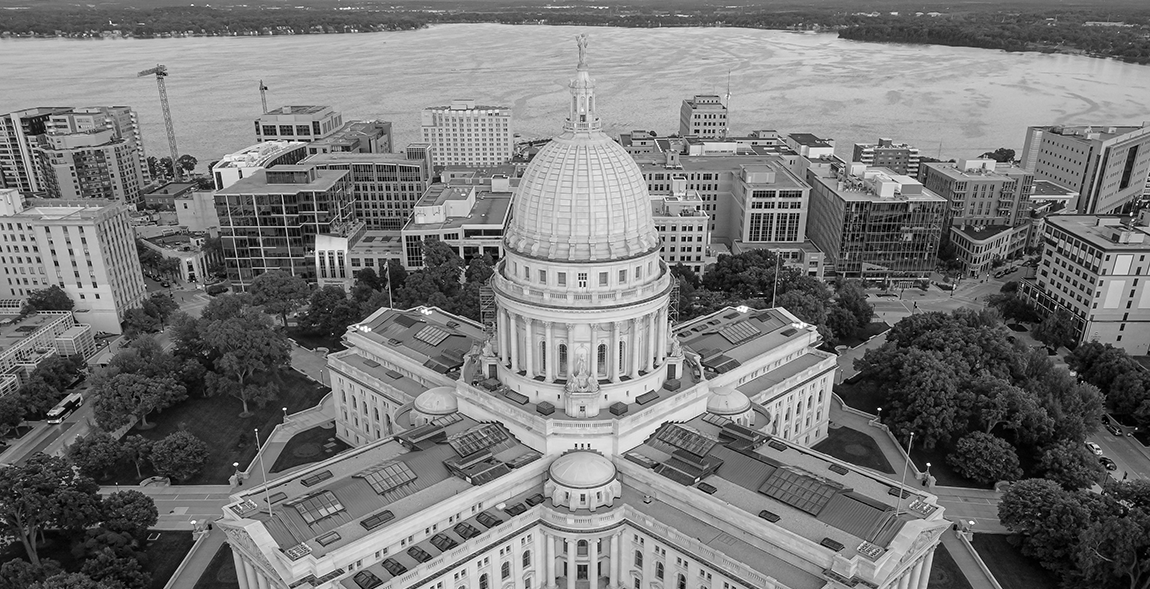


On Thursday, March 19, the Wisconsin State Legislature adjourned its 2025-2026 legislative session. The Legislature introduced 2,711 bills and resolutions during the biennium, with 222 passing the Legislature.
Here’s what you may have missed:
SNAP Benefits
Governor Tony Evers (D) signed AB 180 into law on March 23, which prohibits SNAP recipients from using their benefits to purchase candy and soda, while also providing additional funding for the Wisconsin Department of Health Services. The funding will be allocated towards a FoodShare employment and training program, as well as cover administrative costs to minimize error rates.
This extra funding was a priority for Governor Evers in response to the enactment of the federal Big Beautiful Bill, which penalizes states that have a SNAP payment error rate above 6%. The allocation towards employment and training programs aims to lower the error rate to avoid federal penalties.
The restriction preventing SNAP benefits from being used to purchase certain foods and beverages was made possible through a federal waiver program administered by the U.S. Department of Agriculture, which grants states the ability to obtain waivers that allow them to restrict the purchase of non-nutritious items.
Wisconsin will join 22 other states that have prohibited the use of SNAP benefits to purchase certain sugary foods and drinks through the federal waiver program. Similar SNAP reform legislation is being considered in states such as Georgia, South Carolina, New Hampshire, and Iowa.
The Legislature also passed AB 1027, which would require the Department of Health Services to compile and share data from the SNAP program with the U.S. Department of Agriculture. Governor Evers vetoed this bill on April 8.
PFAS
After years of gridlock, Wisconsin lawmakers have passed two bills that set the framework for spending $133 million to address PFAS contamination. AB 130 and AB 131 both passed the Senate on March 17 and will head to Governor Evers for executive action.
These bills exempt certain individuals and entities, such as owners of agricultural property, under the state’s spills law from paying to eliminate PFAS contamination that they did not cause, and establish grant programs to address PFAS contamination. The allocated funds include $80 million from the PFAS Trust Fund for community mitigation programs and $35 million to expand the Well Compensation Grant Program to increase access to safe drinking water.
This legislative package is the result of months of negotiation between the Governor and lawmakers that led to a bipartisan compromise. The funds were allocated in the 2023-2025 budget to combat PFAS pollution, but they were unspent due to Republican disagreements over how to use them. They were both signed into law on April 6.
Sports Betting
The Legislature passed a bill on March 17 that legalizes online sports betting. AB 601 allows sports bets to be placed via a cell phone or a computer if the server hosting the wager is physically located on recognized tribal lands.
Online sports betting companies opposed the legislation, arguing that it would require them to pay 60% of all revenues to tribes. The bill also faced major opposition from Republicans, citing its potential to increase addictive gambling in the state. Opposition Republicans threatened to remove Senate Majority Leader LeMahieu (R) from his leadership position if he relied on Democratic votes to pass the bill.
This bill was signed into law on April 9, making Wisconsin the 32nd state to legalize online sports betting.
Looking Ahead
Assembly Speaker Robin Vos (R) and Senate Majority Leader Devin LeMahieu (R) have both announced their retirement, leaving vacancies in both majority leader positions in the Assembly and Senate ahead of the 2026 election cycle.
Governor Tony Evers (D) also announced that he would not seek reelection in 2026, leading to a competitive 2026 election cycle. Lt. Governor Sara Rodriguez (D) and former Lt. Governor Mandela Barnes (D) have both announced their candidacy. US Representative Tom Tiffany (R) is generally considered the leading GOP candidate. The new Governor will enter office with a $2.3 billion budget surplus.
The Wisconsin State Legislature is expected to convene for the 2027 legislative session the first week of January to begin the new biennium.
To stay up to date on what will happen in the remaining state legislative sessions this year, reach out to Stateside discuss legislative monitoring and reporting options.