
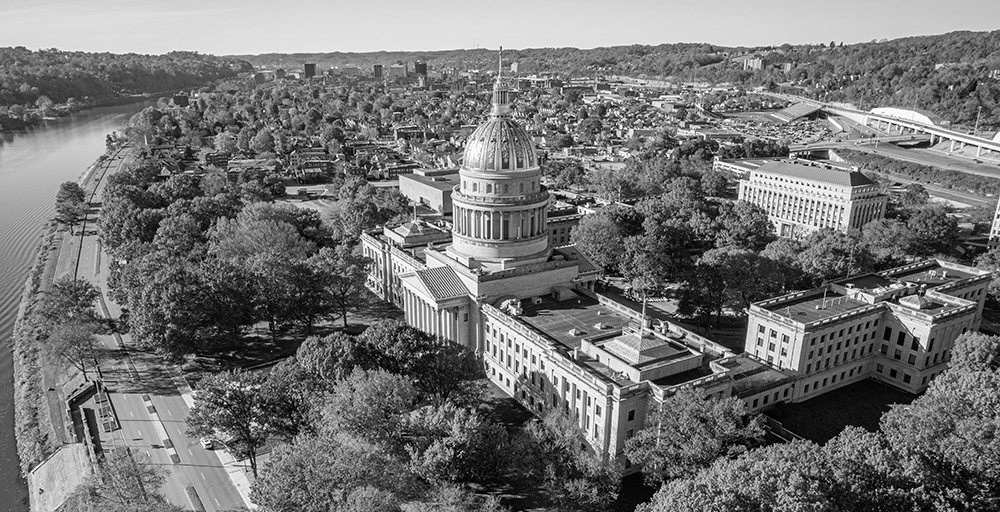


The West Virginia 2026 legislative session adjourned sine die on March 14. Over the course of the 60 day session, the Senate introduced 1084 bills and the House introduced 1691 for a total of 2775 bills this session. So far, Governor Patrick Morrisey (R) has signed 98 measures into law. In total, 306 bills passed both chambers and are eligible for consideration by the governor.
In Governor Morrisey’s State of the State address this year, he spoke about reducing taxes, strengthening the State’s workforce, and utilizing Rural Healthcare Transformation funding to improve health outcomes.
Here is what you may have missed.
Make America Healthy Again
This session the Senate passed SB 570, which appropriates nearly $200 million in Rural Health Transformation funding to West Virginia’s Department of Health. To utilize this funding, House Health and Human Resources Committee Chair Evan Worrell (R) introduced HB 4982, the Make West Virginia Healthy Act of 2026. This measure is a continuation of Governor Morrisey’s focus on the Make America Healthy Again movement, for which the state received federal attention last year after the passage of a bill banning certain food dyes.
HB 4982 is one of the first Food Is Medicine bills enacted in the country. It will allow and encourage Medicaid managed care organizations to offer Food is Medicine services within the state Medicaid program to decrease nutrition-related chronic diseases that contribute to increased health costs. “A simple question: Why are we paying more later when we could pay less earlier? The Food is Medicine provision is a perfect example,” said the sponsor upon passage in the House. “We already pay for dialysis. We already pay for amputations. We pay for ER visits. What this allows is something cheaper – nutrition counseling, medically tailored meals, grocery prescriptions, tools that reduce utilization of expensive care. … We’re simply giving the Bureau of Medical Services the authority to do what works and to measure outcomes.”
This measure was signed by Governor Morrisey on March 2 and takes effect on May 21 of this year.
Income Tax
On March 14, the Senate concurred with House amendments on SB 392, making it eligible to be sent to Governor Patrick Morrisey for his signature. This measure, introduced by Senate President Randy Smith (R), establishes new reduced graduated personal income tax rates in the state. Decreasing income tax rates in West Virginia has been a priority of the Governor for both years of his term so far. Although Governor Morrisey originally sought out a 10% income tax cut in his State of the State address, this measure cuts personal income tax rates by 5% retroactive to January 1 of 2026, returning $125 million to taxpayers when fully implemented. The amendment to the measure makes changes to increase vape and e-cigarette taxes in order to offset revenue losses from the reduced income tax.
This measure was sent to Governor Patrick Morrisey (R) for his signature on March 18, the Governor has 15 days, excluding Sundays, to sign or veto this measure.
Similar income tax reduction legislation has been successful in other Republican led states, such as Georgia, Indiana, Oklahoma, Ohio, and Mississippi.
Budget
On March 12, Governor Patrick Morrissey signed the state budget for fiscal year 2027, while issuing several line-item vetoes, which the Legislature sustained. West Virginia began the year with a $128 million surplus, which along with being used to cut the state income tax, and raise teacher salaries, was to provide:
- $47,500,000 for the PROMISE Scholarship.
- $238,000,510 for the Broadband Development Fund.
- $4 million for the Mountain State Digital Literacy Program.
- $14,450,549 for CHIP Services.
- $1 million to the Department of Commerce for Jobs for WV Graduates.
Looking Ahead
This was Governor Morrisey’s second year in office, marking another session with a Republican controlled Executive and Legislature. In the wake of rising energy bills, the West Virginia legislature failed to successfully address concerns this session after SB 981, which proposed to freeze electric rates for one year, failed to make it to the floor. Rising energy rates and concerns over data centers remain high on the priority list for many constituents and are likely to come back next session. The Governor has not mentioned the need for a special session so the legislature will convene next on January 13, 2027, for the first year of the new biennium.
In November, voters will go to the polls to elect 19 of 34 seats in the West Virginia Senate and all 100 seats in the West Virginia House.
To stay up to date on what will happen in the remaining state legislative sessions this year, reach out to Stateside discuss legislative monitoring and reporting options.
