
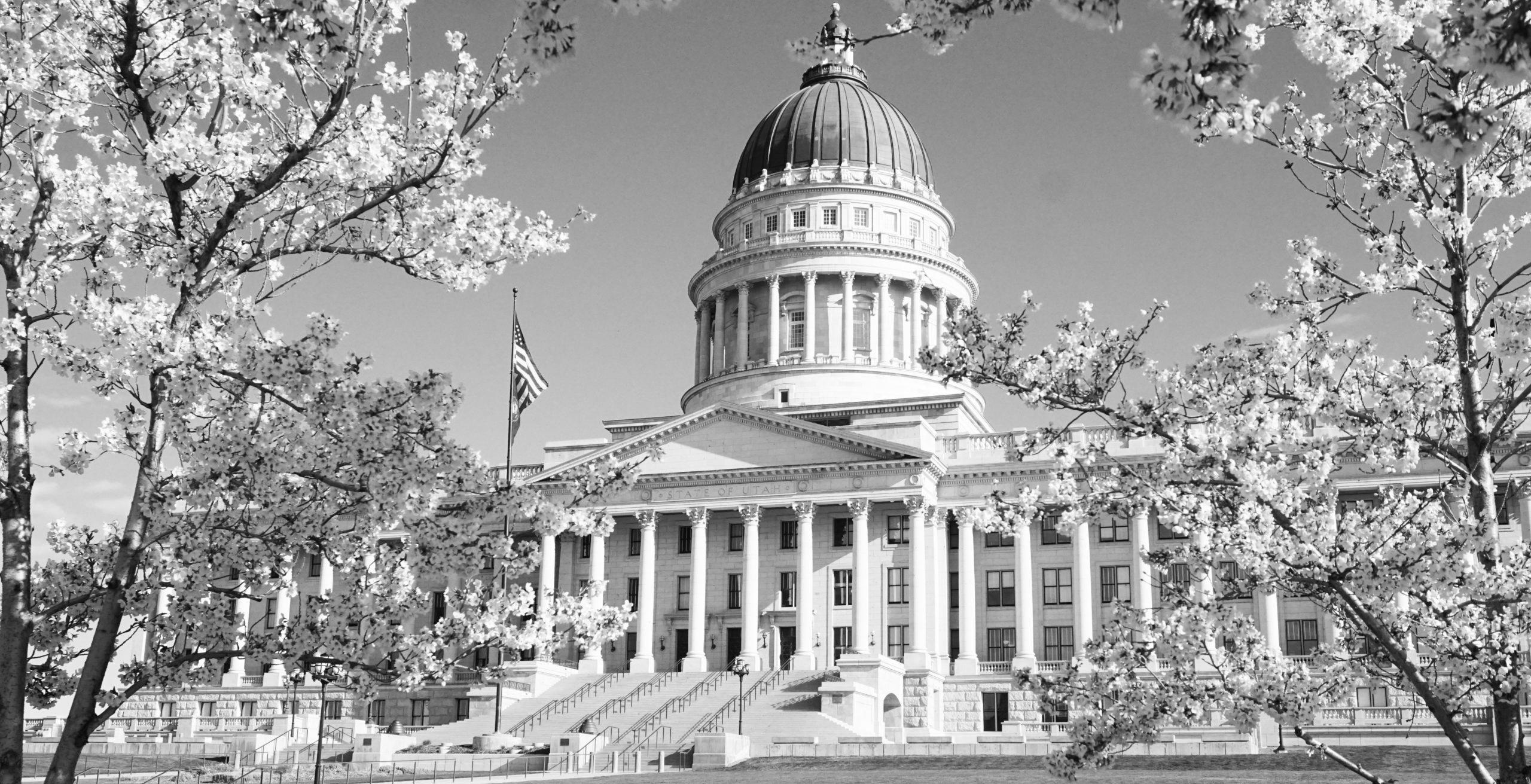


The Utah Legislature adjourned on March 6. The House introduced 584 bills and the Senate 316 for a total of 900 bills. 541 bills passed both chambers of the legislature, of which 511 were signed by Governor Spencer Cox (R), three were vetoed, and one was enacted without the Governor’s signature. The remaining 26 bills that passed the legislature were resolutions that do not require Governor action.
Here’s what you may have missed:
Social Media
In Governor Cox’s State of the State address, he highlighted the need to rein in social media companies, stating that what they do “without a doubt, is tyranny over the minds of our children and grandchildren.” In turn, the legislature passed SB 69, which would prohibit the use of cellphones during school hours. The legislature also passed HB 408, giving individuals the right to control and transfer their data with social media services.
This trend of limiting phone use in schools has taken shape across the states in recent years as Utah follows Indiana, Arkansas, Oklahoma, Oregon, New York, and others who passed bell-to-bell bans in 2025.
Digital Taxes
Furthering Governor Cox’s agenda of taking on social media companies, the legislature passed SB 287 that would impose an annual tax on businesses that deliver targeted advertisements. The funds raised from this tax would go towards supporting youth and mental health programs. This bill was sponsored by Senator Michael McKell (R) stating “For too long, targeted advertising companies have monetized children’s vulnerability, mining their data, capturing their attention, and gathering revenue while avoiding accountability. Our children in Utah are not commodities.”
The legislature also passed SB 162, which would establish a sales and use tax for digital video or audio content, including streaming subscriptions, closing a loophole by clarifying that all online purchases are subject to sales tax regardless of whether they are streamed or downloaded. "While this distinction made sense in the days of RedBox and slower-speed internet, the distinction is less relevant in the landscape of modern technology," Wilson said. "Whether a product is streamed or downloaded, it can be played or watched similarly."
This bill follows similar legislation that passed in Washington last year which would expand their sales tax to include digital services as well as a 10% sales tax imposed in Louisiana on streaming service and television providers which took effect in 2025.
Budget
Utah operates with an annual balanced budget, but deficits can be carried over to the next year. The state has a budget rule that limits spending growth based on population, personal income, and inflation, which can only be overridden by a legislative supermajority or a vote of the people. Additionally, Utah caps total authorized debt and debt service.
The Legislature approved a $31.6 billion budget for fiscal year 2027, with $12.3 billion from state funds. Key provisions included:
- $26,395,900 for Opportunity Scholarships.
- $3 million for tax credit certificates for the Rural Film Incentive Program.
- IAllowing a Local Education Agency to receive funding based on Weight Pupil Units to support college and career counseling and readiness services.
- $49,941,100 for the Minimum School Program, the primary funding source for school districts and charter schools in Utah.
- $196,909,100 for Children's Health Insurance Program Services.
Artificial Intelligence
Governor Cox has been a vocal critic of President Trump’s executive order prohibiting states from legislating on AI, except in certain circumstances. The White House took a vocal stance against HB 286, a bill that would have created risk assessment requirements for AI developers and required certain developers to create public safety plans. As a result, this bill stalled after passing its first chamber committee, showing that the federal government is willing to intervene with states looking to develop an AI policy that is counter to the framework outlined in the executive order.
Looking Ahead
The Utah legislature has an active interim with most committees holding regular meetings to work on legislation for the next legislative session. Special sessions also happen regularly, with two being called in 2025, though Utah special sessions are typically very limited in scope. There are currently discussions around a special session being called regarding a constitutional amendment that would allow lawmakers to change laws enacted by ballot initiative.
All 75 House seats are up for election in 2026, along with 15 Senate seats. The next gubernatorial election will be held in 2028, and while Utah does not have term limits for its governor, Governor Cox has stated this term will be his last, though he has also denied any Presidential aspirations.