
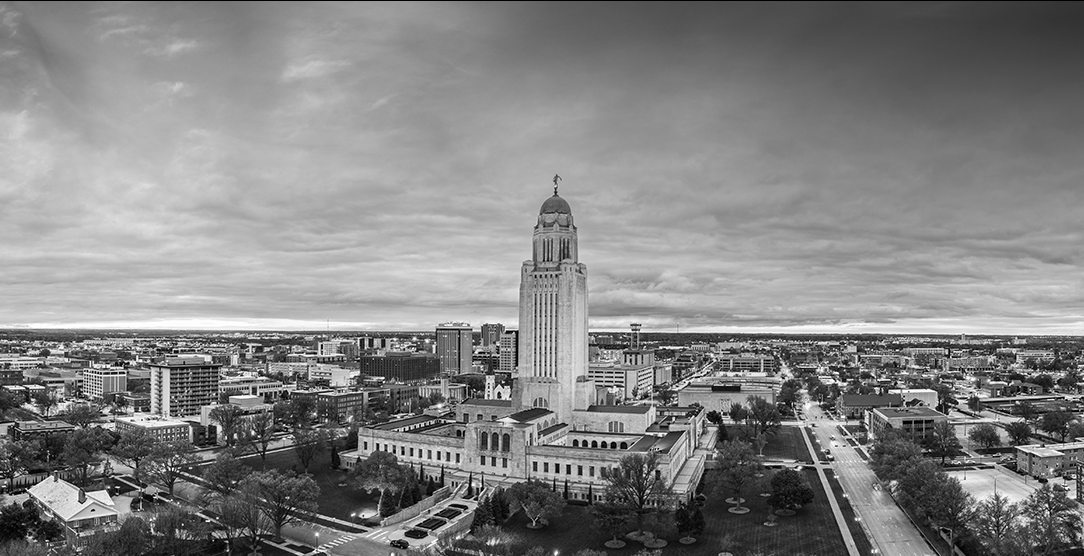


The Nebraska legislature adjourned on April 17th following a 60-day session. The legislature introduced 1,262 bills during the 109th legislative session. Of those bills, 160 were approved by Governor Jim Pillen (R), and 5 bills were vetoed this session. Some of the bills the Governor vetoed included LB 929, which would have allowed Medicaid managed care organizations to pay for cost-sharing on behalf of enrollees as allowed under federal law, and LB 1029, which would have expanded reporting requirements for colleges and universities for funding received from foreign adversarial sources.
Energy
This session, the legislature passed LB 1261, which prohibits consumer-owned utilities in Nebraska from using eminent domain to acquire privately owned electric generation facilities built to serve a single industrial customer. Additionally, the bill requires private suppliers and consumer-owned utilities to execute a long-term contract, such as a power purchase agreement, lease, or joint venture, that preserves the utility's exclusive right to serve retail customers, prohibits resale of electricity, provides acceptable commercial benefits, and waives eminent domain authority for the contract's duration. Furthermore, under this bill, industrial customers must cover all associated costs, fees for congestion charges, and system upgrades, and the facility may only serve the industrial customer. This bill was filed in part as a response to the growing prevalence of data centers. According to the sponsor:
The entire nation is facing unprecedented growth in the demand for electricity led in part by extremely large new loads associated with hyperscale data centers. The unprecedented demand for new generation resources and related infrastructure has significantly constrained the global supply chain for new generation and other necessary equipment. In order to help alleviate this near-term supply chain challenge, it is the intent of this legislation to allow public power utilities to limit their power of eminent domain and collaborate with privately owned generators who may have earlier access to such generators and related equipment to help meet Nebraska’s growing electricity needs.
Additionally, the Governor signed LB 1010, which allows public power suppliers to set or negotiate rates for large-load customers that fairly allocate system costs and reduce both operational and financial risks to other customers. Furthermore, this measure provides that a public power supplier can require a cryptocurrency mining operation or data center to cover the cost of any necessary infrastructure upgrades.
Data and Safety
The Nebraska legislature also passed major legislation dealing with data, critical infrastructure, and security. On April 16th, Governor Jim Pillen (R) signed LB 1096, which prohibits companies and governmental entities from entering into contracts with foreign principals that allow direct or remote access to critical infrastructure. Governor Pillen said in his sine die address that the bill "helps Nebraska stand up to foreign interests, protecting agriculture and infrastructure from adversaries like the Chinese Communist Party.” The legislature additionally passed LB 525, which establishes requirements relating to the sharing and usage of agricultural data. The bill prohibits a processor from selling any person's agricultural data without their written consent.
Business Practices and Economic Development
The legislature passed LB 1165, which was introduced at the request of Governor Pillen . The bill amends provisions of the Grow the Good Life Act, the ImagiNE Nebraska Act, and related economic development statutes to expand incentives and support for large Nebraska employers experiencing a change in ownership and control, particularly mergers with out-of-state entities. According to the governor: “Our state is home to hardworking, dedicated individuals who know how to show up, work hard, and get the job done. However, it is our responsibility to ensure the right economic environment exists so they can build their futures right here at home. By offering long-term, performance-based incentives, we are giving new owners a compelling reason to maintain their headquarters and high-value operations right here in Nebraska, as well as attract new talent to high-paying careers.”
Lastly, Governor Pillen signed LB 838 into law on April 14th. The bill amends licensure requirements for a money transmitter to require that the applicant is not a foreign adversary, among other requirements. Additionally, the bill establishes new requirements for social media platforms, including but not limited to making failure to establish automated and manual fraud detection systems a deceptive trade practice. LB 838 also shields financial institutions from liability for declining to interact with an authorized contact if they are engaged in financial exploitation of a vulnerable or senior adult.
Budget
Nebraska runs on a Biennial Budget that is passed every odd year and funds the government for the succeeding two fiscal years. Supplemental budgets are often passed in even years to provide adjustments to the prior Biennial Budget. Nebraska began the year with a $471 million budget deficit. On April 1st, the Nebraska Legislature passed a budget closing the deficit through a series of cuts to various departments and programs. The budget was signed without any line-item vetoes by the Governor on April 7th. The budget did include a handful of new appropriations for gambling addiction services, children's health insurance, and a multi-trade pre-apprenticeship pilot program.
Looking Forward
The Nebraska legislature adjourned on April 17th and is not expected to convene again until January 6th, 2027. In 2024, Nebraska held a special session to discuss property taxation. No special session has been discussed for 2026 at this time. In the interim, the legislature will discuss the numerous interim study topics filed at the end of this session.