
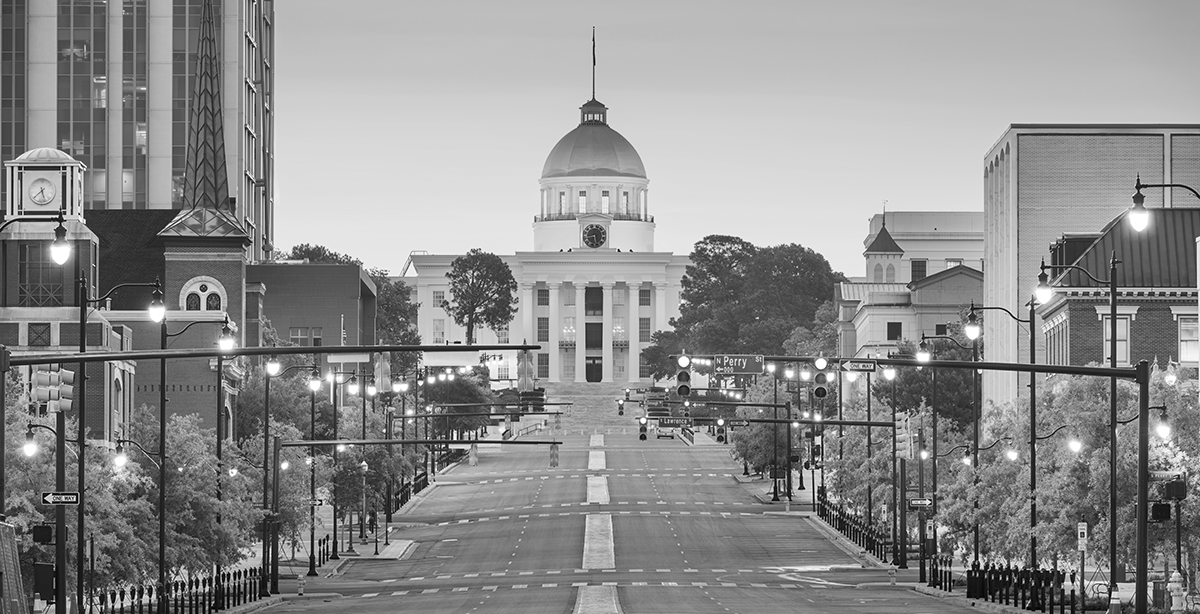


The Alabama Legislature adjourned on April 9, 2026. During the session, the House introduced 666 bills, and the Senate introduced 380, for a total of 1,046 bills. Of these, 277 have been enacted. Another 125 bills have been transmitted to Governor Kay Ivey and remain eligible for her signature. In Alabama, the Governor has six days to sign or veto a bill before it automatically becomes law.
Here are some highlights from the 2026 legislative session:
Education
In her State of the State address, Governor Ivey emphasized the importance of addressing teacher shortages and expanding education. Lawmakers responded by passing several key measures:
- SB 149: Establishes the Military Veteran Temporary Teaching Certificate, allowing veterans to teach in technical fields without a bachelor’s degree.
- HB 520: Streamlines the process for obtaining career and technical education teaching certificates, specifically expediting the process for teachers certified in other states.
- HB 124: Expands eligibility for the Loan Assistance in Support of Educators in Alabama (LASEA) program. Previously limited to math, science, and career technology, loan repayments are now available to any teacher in acute shortage areas, including special education.
House Speaker Nathaniel Ledbetter (R) expressed that career technical and vocational education was a top priority, stating, “A certified plumber or electrician today can make as much money as a doctor or lawyer.”
Expanding teacher credentialing and addressing the teacher shortage have also been a focus of other states this legislative session. States such as Minnesota, New York, Washington, and South Carolina introduced a teacher interstate mobility compact, allowing easier access for teachers to be licensed across state lines, whereas Virginia passed the teacher interstate mobility compact on April 6.
Public Service Commission
The legislature passed HB 475 on April 1, a bill that addresses the Public Service Commission (PSC) and utilities rates for the state. The Senate President Pro Temp Garlan Gudger (R) described it as “the most debated and stressful bill the legislature considered this session.”
As introduced by Representative Mach Butler (R), HB 475 prevents rate increases for utilities until 2029 and would require rate case meetings to justify costs. Currently, the PSC uses formula rates developed in the 1980s. Butler argued the bill was about "holding the PSC accountable" and “forcing energy companies to justify charges to consumers.”
The Senate overhauled the bill, removing the requirement for formal rate case hearings and changing the structure of the PSC by adding more members. The revised bill added required yearly public hearings to discuss utilities in the PSC jurisdiction, but this doesn’t have the same effect as rate case meetings. Senator Clyde Chambliss (R) argued that such frequent rate case hearings were expensive and could lead to higher utility rates, and that the alternative still has the “transparency element in terms of the public hearing.”
Critics of the Senate changes stated the revisions have the potential to pack the PSC with pro-utility commissioners and diminish the public’s voice. Executive Director of Energy Alabama, Daniel Tait, stated that “completely rewriting a bill and passing it through the entire Senate in less than 48 hours is not consumer protection, it’s Alabama Power protection.”
Representative Butler did not support the final version of the bill, and aksed his colleagues not to concur on the bill, but his effort failed. The House was persuaded by Senate arguments that the amended version was sufficient. Governor Ivey signed the bill on April 2, 2026, and it goes into effect on June 1, 2026. Upon signing, Governor Ivey stated that “The Alabama Legislature passed HB 475 to put a freeze on electric rates and to give the people of Alabama broader representation on the Public Service Commission,” and “Alabama is a top 10 state when it comes to cost of living, and we are the number one state for plain affordability. As I have said before, for Alabama to remain the best state to live, work, and raise a family, we have to grow the state, while keeping our cost of living low.”
Budget
On April 8, the Alabama Legislature approved a $3.7 billion General Fund Budget for fiscal year 2027, supporting Medicaid, prisons, state troopers, courts, and state agencies. This budget is an $8.1 million increase over the current year’s budget, and roughly $49 million more than what the Governor proposed. The budget includes funding for Medicaid, broadband, Deepwater Horizon Oil Spill Restoration, vaccines, and funds for highway project bond repayment.
Additionally, the budget makes the first quarter of the appropriation for the Department of Human Resources contingent on the Department lowering the state’s Supplemental Nutrition Assistance Program (SNAP) error rate to 6% by Oct. 1, or developing a plan to cover the cost of federal funding cuts.
Looking Ahead
As 2026 marks Governor Ivey’s final year in office, Alabama enters a major election cycle. Voters will choose a new governor, attorney general, secretary of state, and lieutenant governor, alongside almost every seat in the Senate and House. The legislature is expected to reconvene in January 2027, though interim task forces may begin discussing policy issues throughout the interim.